Perpetual Basils? Not the plant, Perpetual Basil? No, perpetually grow lots of basils (in Spring, Summer and Autumn). I am not the biggest fan of perpetual basil, I find it way less flavoursome. But if you only need a couple of leaves every now and then, you can find the plant ‘Perpetual Basil’ in the herb section of most garden centres; I’m sure most seed places also sell them.
Happy New Year! Great to be back. Now look at my basils.
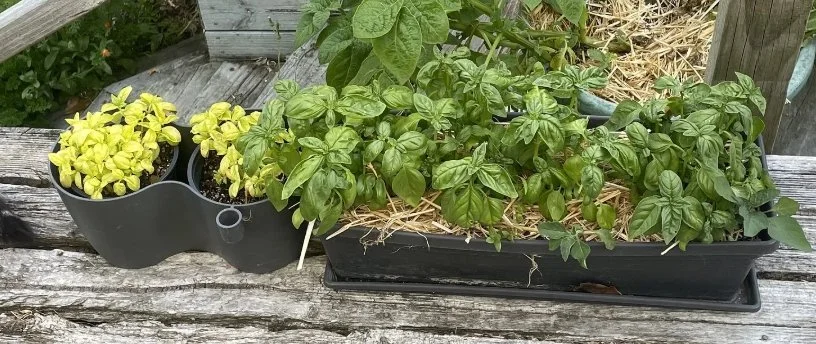
Look at them! How depressing is the left hand one! How luscious is the right hand one (albeit thirsty, I really should have watered before taking the photo).
This was supposed to be my crowning moment- the post in which I told you I have Hacked Basil and have the perfect balance of basil eating to mature basil growing in my garden. I thought I had only bought Genovese basil but vaguely remember picking up the seeds that are ‘good for pots’ (ie smaller). Unfortunately, for whatever reason, the sweet basil hasn’t gotten any bigger than about 10cm, no one considers it edible because they don’t want to pick immature plants, and the genovese, that was planted months after the sweet basil, is living its best life.
For those who are interested, I was given this sweet herb container on the left years ago. It perfectly fits 2 common nursery pots, so I have been stagger planting basil in these pots since October. The idea was that I could swap the used basil pots out with prepped new basil pots as we were done. Unfortunately no one except me will touch the Sweet Basil and the Genovese, which I put in the longer troughs as a way to stop people standing too close to the edge of the deck, is the only one people will eat.
If you want to stagger growing your basil, here is what I did-
At the start of the season, I made sure I had a stack of the ‘right size’ pots. They are the size that fit into my nice cover pots. (10 pots)
I planted out 6 pots at the start of the season, with basil it is best to 7/8ths fill the pot with potting mix, soak it deeply, then sprinkle the seeds on and sprinkle damp potting mix on top. Push it down. Don’t water it. This is because the seeds are easily washed away. (One pack of basil seeds does about 6 pots).
I put them in (because it was Spring) full sun on a tray in my little greenhouse, and some on the kitchen windowsill. If the potting mix on top got a bit dry I watered it sparingly.
Then I waited, and once it got to about 6cm I put the first lot of pots into the cover pots, popped it in the kitchen on a sunny windowsill, and set up the last 4 pots. Every time I used 4 pots, I would fill them with potting mix and seeds and start over.
If I ended up with roots coming out the bottom of the pots and wasn’t ready to use the basil, I planted it in a sunny spot in the garden. I’ve only had to do that with 2 pots thus far.
I’m glad that I had the commitment to follow this through, and it is a bummer about the sweet basil being so aesthetically different from what we are used to, but it tastes great. Really I should have put a little note on it saying “this is mature and tasty basil….”
Saving seeds (lazily, effectively)
This is a great time of year to identify what you really love in your garden, and what you are not that fussed about. When I have spotted a plant I especially like (read: suits the spot well, is a flattering colour) in a client’s garden, instead of deadheading and taking away the spent flower heads, I cut off the flower heads when I know they have seeds in them and leave them on the ground. At this time of year there is enough going on in the garden that it’s not too noticeable. And viola, more of the same type of plant pop up! Obviously you can just transport the dead heads to wherever in the garden you want the plant to pop up.
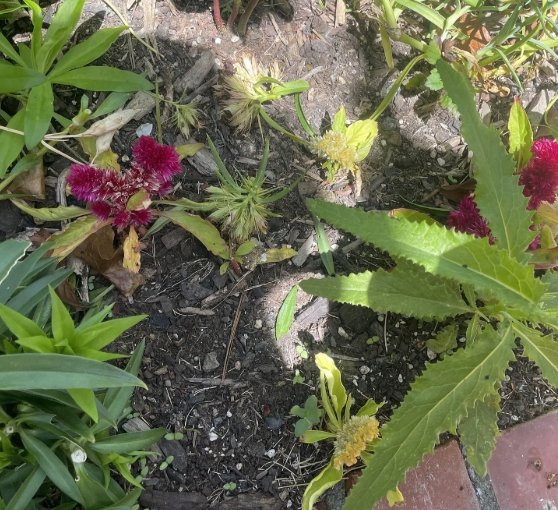
How do I know if a dead head has seeds in it?
If you deadhead too early, the seeds won’t have set. Some plants have small black seeds that are quite obvious when you look into the head. You can also tap or pull at the bits still on the dead head and see how dry it is in there. I often just shake one upside down and if bits are coming out I know it’s ready.
The only time I don’t do this is when the ground is really bare in Winter. It is hard enough trying to keep your garden looking nice and tidy in midwinter, and this method can look quite untidy.
Some garden tasks for January
If you have a lot of annuals in your garden, continue to plant them in January, beside the ones that are starting to look a bit past their best.
There is always lots of weeding to do!
When trimming your plants, pick an overcast day or try to avoid doing it in harsh hot sun. The leaves can be sunburnt quite easily at this time of year, they would love a few overcast days to recover. Regularly trimmed plants are much more tolerant than infrequently trimmed plants.
Deadheading plants like roses will ensure you get far, far more blooms. Regularly picking vegetables like beans, tomatoes and zucchini will also ensure the plants keep pumping out more food.
Do a wee bug check on your plants- a good one to do with kids. Aphids are best blasted with mildly soapy water.
Convolvulous and ivy are really enjoying their time lately. If you can’t remove it completely, simply because it is growing very quickly do remove as much as you can! I was in a garden yesterday where the paths were littered in wee piles of convolvulous, as the owner walked past she would tear at it and drop it onto the concrete where the sun would kill it.
—
I hope you all had a fantastic break. Here in Wellington, it has been scorchingly hot and sunny, interspersed with some cold, rainy days- so the growth has been phenomenal and some usually-happy plants are sunburnt. I have had a lovely break, although my mother in law referred to it as a Busman’s Holiday (because I was mostly in my garden, and also working on our do’er upper house).